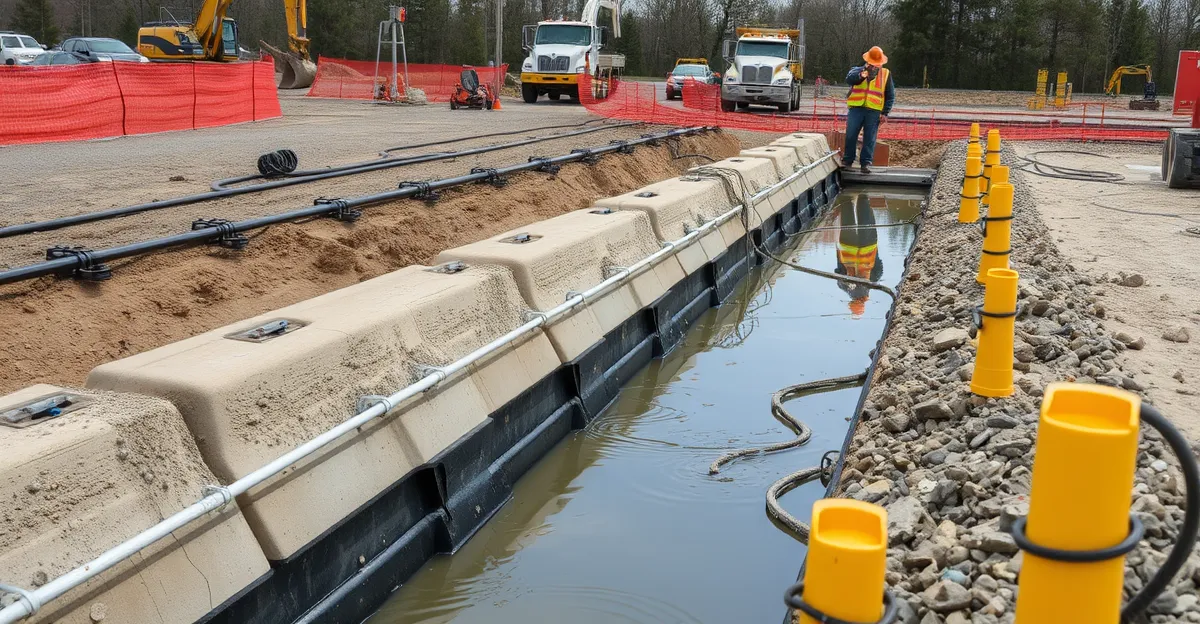
Water pollution prevention during construction activities represents one of the most critical environmental responsibilities facing contractors today. With increasingly stringent regulations and growing public awareness of water quality issues, construction professionals must implement comprehensive strategies to protect surface water, groundwater, and surrounding ecosystems. This comprehensive guide provides contractors with practical, actionable strategies for preventing water pollution while maintaining project efficiency and regulatory compliance.
Understanding Construction-Related Water Pollution
Construction activities can impact water quality through multiple pathways, including surface runoff, groundwater infiltration, direct discharges, and atmospheric deposition. Understanding these pollution mechanisms is essential for developing effective prevention strategies that address both obvious and subtle sources of contamination.
Surface water pollution from construction sites typically occurs through stormwater runoff that carries sediment, chemicals, debris, and other contaminants to nearby streams, rivers, lakes, or coastal waters. This runoff can dramatically alter water chemistry, increase turbidity, reduce dissolved oxygen levels, and harm aquatic ecosystems.
Common Construction Pollutants
Sediment represents the most common construction-related water pollutant, generated through soil erosion, excavation activities, and improper material handling. Even small amounts of sediment can significantly impact aquatic habitats by reducing light penetration, clogging fish gills, and altering streambed composition.
Chemical pollutants from construction sites include petroleum products from equipment operations, concrete washwater containing high pH levels, paint and coating residues, adhesives, solvents, and various construction chemicals. These substances can be toxic to aquatic life even in relatively small concentrations.
Nutrient pollution from construction activities can result from fertilizer applications, erosion control measures, and organic debris. Excess nutrients in water bodies can trigger algal blooms, oxygen depletion, and ecosystem disruption.
Regulatory Framework for Water Pollution Prevention
National Pollutant Discharge Elimination System (NPDES)
The NPDES program, administered under the Clean Water Act, regulates point source discharges to waters of the United States. Construction activities disturbing one acre or more require NPDES Construction General Permit coverage, which mandates the development and implementation of a Stormwater Pollution Prevention Plan (SWPPP).
The Construction General Permit requires contractors to implement best management practices (BMPs) to minimize pollutant discharges, conduct regular inspections, maintain compliance documentation, and report any violations or permit exceedances. Failure to obtain required permits or comply with permit conditions can result in substantial fines and legal action.
State and Local Water Quality Regulations
Many states have implemented water quality regulations that exceed federal requirements, creating additional compliance obligations for construction contractors. These may include stricter sediment and erosion control standards, enhanced inspection frequencies, specialized permit requirements for work near sensitive water bodies, and mandatory use of specific BMPs.
Local governments often impose additional water quality protection measures through ordinances, development codes, and permitting requirements. Contractors must research and comply with all applicable regulations at federal, state, and local levels before beginning construction activities.
Emerging Regulatory Trends
Water quality regulations continue evolving in response to new scientific understanding and emerging contaminants of concern. Current regulatory trends include increased focus on nutrients, per- and polyfluoroalkyl substances (PFAS), microplastics, and climate change impacts on water resources.
Total Maximum Daily Load (TMDL) programs in impaired watersheds may impose additional restrictions on construction activities. Contractors working in TMDL watersheds may face enhanced monitoring requirements, specialized BMPs, or limitations on certain construction techniques.
Stormwater Management Strategies
Site Planning and Design Considerations
Effective stormwater management begins during the project planning phase with careful consideration of site topography, drainage patterns, soil conditions, and proximity to water bodies. Strategic site planning can minimize disturbance, preserve natural drainage features, and reduce the need for extensive stormwater controls.
Phased construction approaches can significantly reduce exposed soil areas and associated erosion risks. By limiting active construction areas and implementing progressive stabilization, contractors can maintain effective erosion control while allowing construction activities to proceed efficiently.
Low Impact Development (LID) principles emphasize infiltration, evapotranspiration, and natural treatment processes to manage stormwater. Incorporating LID features such as bioretention areas, permeable pavements, and green roofs can enhance long-term water quality protection while meeting regulatory requirements.
Erosion and Sediment Control
Erosion prevention represents the most effective approach to sediment control, as preventing soil detachment is typically more efficient and cost-effective than capturing sediment after erosion has occurred. Effective erosion prevention strategies include minimizing soil exposure time, protecting steep slopes, and maintaining vegetative cover where possible.
Sediment control measures capture eroded soil before it leaves the construction site or enters water bodies. Common sediment control BMPs include sediment basins, sediment traps, check dams, and perimeter controls such as silt fences and sediment logs.
Sediment basin design requires careful consideration of drainage area, runoff volumes, settling characteristics, and maintenance requirements. Properly designed and maintained sediment basins can achieve high removal efficiencies for suspended solids while providing temporary storage for stormwater runoff.
Chemical Treatment Systems
Chemical treatment systems using coagulants and flocculants can enhance sediment removal efficiency, particularly for fine particles that resist settling in conventional sediment basins. These systems require careful chemical dosing, pH monitoring, and specialized equipment operation.
Polymer treatment systems have gained popularity for their effectiveness in treating construction site runoff. However, these systems require trained operators, regular monitoring, and careful attention to dosing rates to avoid over-treatment or environmental impacts.
Electrocoagulation represents an emerging technology for construction site stormwater treatment. This process uses electrical current to generate coagulants in-situ, potentially offering advantages in terms of treatment effectiveness and operational simplicity.
Best Management Practices Implementation
Structural BMPs
Structural BMPs provide physical controls for managing stormwater runoff and removing pollutants. These measures include both temporary controls for construction activities and permanent features that provide long-term water quality protection.
Temporary structural BMPs must be designed to withstand construction-related stresses while providing effective pollutant removal. Common temporary BMPs include construction entrances, temporary diversions, slope drains, and temporary retention/detention facilities.
Permanent structural BMPs are integrated into the final project design and provide ongoing stormwater management. These features include bioretention systems, constructed wetlands, extended detention basins, and infiltration practices.
Non-Structural BMPs
Non-structural BMPs focus on operational practices, policies, and procedures that prevent pollution at its source. These measures are often the most cost-effective approach to water quality protection and can significantly enhance the effectiveness of structural controls.
Good housekeeping practices include proper material storage, waste management, equipment maintenance, and spill prevention procedures. These practices prevent pollutants from coming into contact with stormwater and reduce the treatment burden on structural BMPs.
Education and training programs ensure that all construction personnel understand their responsibilities for water quality protection. Regular training sessions, toolbox talks, and awareness campaigns help maintain consistent implementation of pollution prevention measures.
BMP Selection Criteria
Selecting appropriate BMPs requires consideration of site-specific factors including soil conditions, topography, climate, space constraints, maintenance requirements, and regulatory objectives. No single BMP is appropriate for all situations, and most effective programs utilize multiple complementary practices.
Treatment train approaches combine multiple BMPs in series to achieve enhanced pollutant removal. This strategy recognizes that different BMPs excel at removing different types of pollutants and that multiple barriers provide redundancy and improved reliability.
Life cycle considerations include installation costs, maintenance requirements, replacement schedules, and end-of-life disposal. BMPs that appear cost-effective initially may prove expensive to maintain or may have short service lives requiring frequent replacement.
Spill Prevention and Response
Spill Prevention Planning
Comprehensive spill prevention planning identifies potential spill sources, assesses risks, and implements preventive measures to minimize the likelihood of releases. This planning process should address fuel storage and handling, equipment maintenance, chemical usage, and waste management operations.
Secondary containment systems provide backup protection in case primary containers fail. These systems include berms, containment pads, double-walled tanks, and covered storage areas that prevent spilled materials from reaching soil or water.
Regular equipment inspection and maintenance programs identify potential failure points before they result in environmental releases. These programs should include hydraulic systems, fuel lines, storage tanks, and chemical handling equipment.
Emergency Response Procedures
Effective spill response requires immediate action to contain releases, protect human health and safety, and minimize environmental impacts. Response procedures should be clearly documented, regularly practiced, and understood by all construction personnel.
Spill response equipment should be readily available at construction sites and include absorbent materials, containment supplies, personal protective equipment, and communication devices. Response equipment must be appropriate for the types and quantities of materials present at the site.
Notification procedures ensure that appropriate authorities are contacted promptly when spills occur. These procedures should include internal company contacts, regulatory agencies, emergency responders, and potentially affected communities.
Documentation and Reporting
Thorough documentation of spill incidents supports effective response, regulatory compliance, and future prevention efforts. Documentation should include incident descriptions, response actions, cleanup activities, and lessons learned.
Regulatory reporting requirements vary depending on spill size, material type, and environmental impacts. Contractors must understand applicable reporting thresholds and timelines to ensure compliance with all notification requirements.
Post-incident analysis helps identify root causes and implement corrective measures to prevent similar incidents. This analysis should examine equipment failures, procedural deficiencies, training needs, and systemic issues that contributed to the incident.
Groundwater Protection Strategies
Groundwater Vulnerability Assessment
Understanding groundwater vulnerability helps contractors identify areas where enhanced protection measures may be necessary. Vulnerability factors include depth to groundwater, soil permeability, recharge rates, and proximity to water supply wells.
Wellhead protection areas around public water supply wells may have special requirements for construction activities. These requirements can include prohibited activities, enhanced spill prevention measures, and specialized permit requirements.
Karst terrain presents unique groundwater protection challenges due to rapid infiltration and limited filtration capacity. Construction in karst areas requires specialized techniques to prevent contamination of underground streams and aquifers.
Dewatering Management
Construction dewatering operations must be carefully managed to prevent groundwater contamination and comply with discharge requirements. Dewatering plans should address water quality testing, treatment needs, and discharge locations.
Groundwater treatment may be necessary when dewatering encounters contaminated groundwater or when construction activities alter groundwater chemistry. Treatment options include filtration, chemical precipitation, air stripping, and biological treatment.
Injection well regulations govern the disposal of treated groundwater and construction-related waters. Contractors must obtain appropriate permits and comply with injection well construction and operation requirements.
Contaminated Site Considerations
Construction on contaminated sites requires specialized water protection measures to prevent mobilization of existing contamination. These measures may include containment systems, groundwater monitoring, and vapor controls.
Institutional controls such as groundwater use restrictions may limit certain construction techniques or require ongoing monitoring and maintenance. Contractors must understand and comply with all applicable institutional controls.
Risk assessment approaches help determine appropriate protection measures for contaminated sites. These assessments consider contaminant types and concentrations, exposure pathways, and potential receptors.
Water Quality Monitoring and Testing
Monitoring Program Design
Effective water quality monitoring programs provide data to assess BMP performance, demonstrate regulatory compliance, and identify potential problems before they become significant. Monitoring program design should consider regulatory requirements, site conditions, and project objectives.
Sampling locations must be representative of site conditions and provide meaningful data for decision-making. Upstream and downstream sampling points help distinguish between project-related impacts and background conditions.
Sampling frequency depends on regulatory requirements, weather conditions, construction activities, and risk levels. More frequent sampling may be necessary during active construction phases or following significant storm events.
Parameter Selection
Water quality parameters should be selected based on potential pollutant sources, regulatory requirements, and environmental concerns. Common parameters for construction site monitoring include turbidity, total suspended solids, pH, temperature, and oil and grease.
Metals monitoring may be necessary when construction activities involve metallic materials, welding operations, or work on contaminated sites. Priority metals typically include copper, zinc, lead, and iron.
Biological monitoring using aquatic organisms or community assessments can provide integrated measures of ecosystem health. These approaches may be required for projects near sensitive habitats or when other monitoring indicates potential impacts.
Quality Assurance and Data Management
Quality assurance procedures ensure that monitoring data are accurate, reliable, and legally defensible. These procedures include chain of custody protocols, equipment calibration, duplicate sampling, and laboratory quality control.
Data management systems facilitate storage, analysis, and reporting of monitoring results. These systems should provide secure data storage, automated quality checks, and convenient reporting capabilities.
Trend analysis helps identify changes in water quality over time and assess the effectiveness of pollution prevention measures. Statistical methods can help distinguish between random variation and meaningful trends.
Emerging Technologies and Innovation
Advanced Treatment Technologies
Membrane filtration technologies offer potential advantages for construction site water treatment, including high removal efficiencies, compact footprints, and automated operation. These technologies include microfiltration, ultrafiltration, and reverse osmosis systems.
Constructed treatment wetlands provide natural treatment processes that can be effective for construction site runoff. These systems require minimal energy inputs and can provide habitat benefits in addition to water quality improvement.
Electrochemical treatment processes are emerging as alternatives to chemical treatment systems. These processes can generate treatment chemicals on-site, reducing chemical storage and handling requirements.
Smart Monitoring Systems
Real-time monitoring systems provide continuous water quality data that enable rapid response to changing conditions. These systems can include automated sampling, telemetry, and alarm functions that alert operators to potential problems.
Drone-based monitoring offers new capabilities for assessing large construction sites and remote areas. Drones equipped with water quality sensors can provide rapid site-wide assessments and identify potential problem areas.
Artificial intelligence and machine learning applications can help analyze complex monitoring data sets and predict potential water quality issues. These tools may enable more proactive management of construction site water quality.
Green Infrastructure Integration
Living shoreline techniques provide natural alternatives to traditional erosion control methods near water bodies. These approaches use native vegetation, natural materials, and ecological processes to provide erosion protection while enhancing habitat.
Bioengineered soil amendments can enhance the water quality treatment capacity of existing soils. These amendments may include specialized bacteria, fungi, or other biological agents that improve pollutant removal.
Integrated stormwater management approaches combine multiple green infrastructure practices to provide comprehensive water quality protection. These approaches may include bioretention, permeable pavement, green roofs, and rainwater harvesting.
Cost-Benefit Analysis and Economics
Direct Cost Considerations
Water pollution prevention costs include initial BMP installation, ongoing maintenance, monitoring and reporting, and administrative expenses. These costs vary significantly depending on site conditions, regulatory requirements, and selected practices.
Preventive measures are typically more cost-effective than remedial actions. Investing in comprehensive pollution prevention can avoid expensive cleanup costs, regulatory penalties, and legal liabilities that result from water quality violations.
Life cycle cost analysis provides a comprehensive evaluation of BMP economics by considering installation, operation, maintenance, and replacement costs over the entire service life of the practice.
Indirect Benefits
Water pollution prevention provides numerous indirect benefits including enhanced corporate reputation, improved community relations, reduced regulatory scrutiny, and potential insurance premium reductions. These benefits can be substantial but are often difficult to quantify.
Ecosystem services provided by effective water quality protection include habitat preservation, flood control, groundwater recharge, and recreational opportunities. These services have economic value that should be considered in decision-making.
Climate resilience benefits of green infrastructure practices include reduced flood risks, urban heat island mitigation, and carbon sequestration. These co-benefits enhance the overall value proposition for comprehensive stormwater management.
Funding and Incentive Programs
Government grant programs may provide financial assistance for innovative water quality protection projects. These programs often prioritize demonstration projects, green infrastructure, and approaches that provide multiple environmental benefits.
Stormwater credit programs in some jurisdictions provide ongoing financial incentives for property owners who implement effective stormwater management practices. These programs can help offset the costs of enhanced water quality protection.
Environmental impact mitigation banking allows developers to purchase credits for water quality improvements implemented elsewhere. This approach can provide cost-effective compliance options while supporting large-scale habitat restoration projects.
Frequently Asked Questions
Do I need a stormwater permit for my construction project?
Construction projects disturbing one acre or more typically require NPDES Construction General Permit coverage. Smaller projects may also require permits depending on local regulations or if they're part of a larger common plan of development.
What is a SWPPP and do I need one?
A Stormwater Pollution Prevention Plan (SWPPP) is required for projects covered under the NPDES Construction General Permit. The SWPPP documents site conditions, identifies potential pollutant sources, and describes BMPs to prevent water pollution.
How often do I need to inspect my BMPs?
NPDES permits typically require weekly inspections during active construction and within 24 hours after significant storm events. Some jurisdictions may have more frequent inspection requirements.
What should I do if my sediment control measures fail during a storm?
Immediately assess the situation, implement emergency repairs if safe to do so, document the incident, and notify appropriate authorities if required. Develop a plan to prevent similar failures in the future.
Can I discharge construction dewatering directly to storm drains?
Dewatering discharges typically require permits and may need treatment before discharge. Check with local authorities about specific requirements and approved discharge locations.
What are the penalties for water quality violations?
Penalties can include daily fines ranging from thousands to tens of thousands of dollars, stop-work orders, criminal prosecution for willful violations, and liability for cleanup costs and natural resource damages.
How do I choose the right sediment control measures for my site?
Consider factors including drainage area, slope, soil type, space constraints, maintenance requirements, and local regulations. Consult with environmental professionals for complex sites.
What water quality parameters should I monitor?
Common parameters include turbidity, total suspended solids, and pH. Additional parameters may be required based on site conditions, potential pollutant sources, and regulatory requirements.
How long do I need to maintain BMPs after construction is complete?
Temporary BMPs should be maintained until the site is stabilized and permanent stormwater controls are functional. Permanent BMPs require ongoing maintenance throughout their design life.
Can I use chemicals to treat construction site runoff?
Chemical treatment systems can be effective but require permits, trained operators, and careful monitoring. Consult with regulatory agencies before implementing chemical treatment systems.
What's the difference between erosion control and sediment control?
Erosion control prevents soil from being detached and transported, while sediment control captures eroded soil. Erosion prevention is typically more effective and cost-efficient than sediment capture.
Do green infrastructure practices count as BMPs?
Yes, properly designed and maintained green infrastructure practices can serve as effective BMPs and may provide additional benefits including habitat enhancement and flood control.
How do I document BMP maintenance activities?
Maintain detailed records including inspection dates, maintenance activities performed, materials used, personnel involved, and photographic documentation. These records demonstrate compliance and support insurance claims.
What should I include in my spill response kit?
Include absorbent materials, containment supplies, personal protective equipment, emergency contact information, and reporting forms. Size the kit based on the types and quantities of materials at your site.
Can I reuse treated construction site runoff?
Treated runoff may be suitable for dust control, equipment washing, or other non-potable uses. Check local regulations and ensure appropriate treatment before reuse.
Conclusion
Effective water pollution prevention during construction requires a comprehensive approach that integrates regulatory compliance, environmental stewardship, and sound business practices. As environmental regulations continue to evolve and public awareness of water quality issues grows, contractors who invest in robust pollution prevention programs position themselves for long-term success.
The strategies outlined in this guide provide a foundation for developing site-specific water protection programs that meet regulatory requirements while minimizing costs and project delays. Remember that water pollution prevention is not just a regulatory obligation—it's an opportunity to demonstrate environmental leadership and protect the water resources that communities depend on.
Success in water pollution prevention requires ongoing commitment, regular training, continuous improvement, and adaptation to changing conditions. By implementing comprehensive prevention strategies, contractors can protect water quality, avoid regulatory penalties, reduce insurance risks, and contribute to sustainable development practices.
As you develop your water pollution prevention program, consider consulting with environmental professionals, regulatory agencies, and insurance specialists who can help you navigate the complexities of water quality protection. The investment in comprehensive prevention pays dividends through reduced liability, enhanced reputation, and protection of our shared water resources.
Ready to Protect Your Business?
Get expert construction pollution coverage that protects you from water-related environmental liabilities.
Get a Free Quote