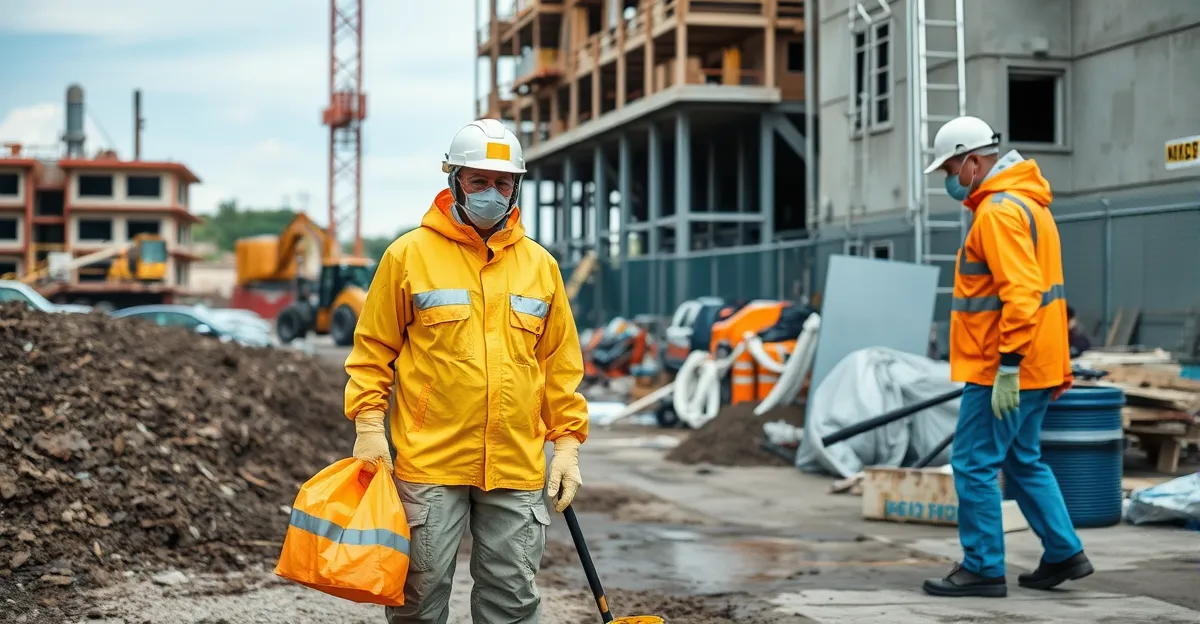
Construction pollution liability insurance has become an essential protection for contractors working in today's environmentally conscious marketplace. As environmental regulations become increasingly stringent and cleanup costs continue to rise, contractors who overlook this critical coverage expose themselves to potentially devastating financial losses. This comprehensive guide explores everything contractors need to know about construction pollution liability insurance, from basic coverage concepts to advanced policy considerations.
What is Construction Pollution Liability Insurance?
Construction pollution liability insurance is a specialized form of environmental insurance designed to protect contractors from costs associated with pollution incidents that occur during construction activities. Unlike general liability insurance, which typically excludes pollution-related claims, this coverage specifically addresses environmental contamination and its consequences.
The coverage extends beyond immediate cleanup costs to include legal defense expenses, third-party bodily injury claims, property damage caused by pollution, and regulatory fines and penalties. For construction professionals, this insurance serves as a critical financial safety net in an industry where environmental incidents can result in multi-million-dollar liabilities.
Historical Context and Evolution
The need for pollution liability insurance in construction emerged from several landmark environmental legislation pieces, including the Comprehensive Environmental Response, Compensation, and Liability Act (CERCLA) of 1980, commonly known as Superfund. This legislation established strict liability standards, meaning that parties can be held responsible for environmental contamination regardless of fault or negligence.
As environmental awareness grew throughout the 1980s and 1990s, insurance companies began developing specialized pollution liability products to address coverage gaps in traditional commercial general liability policies. The construction industry, with its potential for soil disturbance, chemical usage, and equipment operations, became a primary market for these innovative insurance solutions.
Types of Construction Pollution Liability Coverage
Site-Specific Coverage
Site-specific pollution liability insurance provides protection for contamination incidents occurring at a particular construction location. This coverage is ideal for large construction projects, remediation work, or situations where the contractor has specific concerns about environmental risks at a given site.
The policy typically covers both pre-existing and new contamination discovered during the policy period. Pre-existing contamination coverage is particularly valuable when contractors are working on sites with unknown environmental histories or potential legacy contamination issues.
Contractor's Pollution Liability (CPL)
Contractor's pollution liability insurance provides broader coverage that follows the contractor to multiple job sites. This portable coverage is particularly beneficial for contractors who work on numerous projects throughout the year and need consistent environmental protection across all their operations.
CPL policies typically cover pollution conditions arising from the contractor's operations, including accidents involving hazardous materials, fuel spills from equipment, and contamination caused by construction activities. The coverage can be written on either a claims-made or occurrence basis, with most modern policies utilizing the claims-made structure.
Project-Specific Environmental Insurance
For large-scale construction projects involving multiple contractors, project-specific environmental insurance provides comprehensive coverage for all parties involved in the project. This master policy approach ensures consistent coverage terms and limits across all project participants while potentially reducing overall insurance costs through economies of scale.
Project-specific coverage is particularly beneficial for complex construction projects involving environmental remediation, brownfield redevelopment, or construction in environmentally sensitive areas. The coverage can be structured to include both contractors and project owners, creating a unified approach to environmental risk management.
Key Coverage Components
First-Party Coverage
First-party coverage protects the policyholder's own interests and typically includes cleanup costs for contamination on the insured's property or job sites. This coverage component is essential for contractors who may be held responsible for environmental remediation regardless of whether third-party claims are involved.
The coverage extends to emergency response costs, which can include immediate containment measures, environmental consultants, and temporary remediation efforts. These immediate response costs can quickly escalate into significant expenses, making first-party coverage a critical component of any comprehensive pollution liability policy.
Third-Party Coverage
Third-party coverage addresses liability to external parties and includes bodily injury, property damage, and natural resource damage claims arising from pollution conditions. This coverage component protects contractors from lawsuits filed by neighboring property owners, government entities, or other affected parties.
Natural resource damage claims, in particular, can result in substantial financial exposures. These claims involve compensation for harm to natural resources such as groundwater, soil, wildlife habitats, and ecosystems. Government agencies increasingly pursue natural resource damage claims, making this coverage component essential for construction operations near sensitive environmental areas.
Legal Defense Coverage
Environmental claims often involve complex litigation with multiple parties, extensive scientific evidence, and prolonged legal proceedings. Legal defense coverage provides protection for attorney fees, expert witness costs, court expenses, and other litigation-related expenses.
The coverage typically includes both civil and criminal defense costs, recognizing that environmental violations can result in criminal prosecution of corporate officers and employees. This comprehensive legal protection ensures that contractors have access to specialized environmental attorneys and technical experts necessary for effective claim defense.
Common Exclusions and Limitations
Standard Policy Exclusions
While construction pollution liability insurance provides broad environmental protection, policies contain specific exclusions that contractors must understand. Common exclusions include intentional acts, criminal violations, and pollution conditions that existed prior to the policy inception date (unless specifically covered under pre-existing contamination provisions).
Professional liability exclusions eliminate coverage for design errors, specification problems, and other professional services issues. Contractors who provide design-build services or consulting may need separate professional liability coverage to address these exposures.
Geographic and Temporal Limitations
Coverage territories and time limitations represent important policy restrictions. Most policies limit coverage to specific geographic areas, typically the United States and its territories. Contractors working on international projects need to ensure their coverage extends to those locations or obtain separate international pollution liability insurance.
Temporal limitations include policy periods, discovery periods, and reporting requirements. Claims-made policies require both the pollution condition and the claim to occur during the policy period, making continuous coverage essential for ongoing protection.
Cost Factors and Premium Considerations
Risk Assessment Variables
Insurance companies evaluate numerous factors when pricing construction pollution liability coverage. Primary considerations include the contractor's business operations, project types, geographic territories, claims history, and risk management practices.
High-risk activities such as underground construction, work near water bodies, handling of hazardous materials, and operations in environmentally sensitive areas typically result in higher premiums. Conversely, contractors with strong environmental management systems, clean claims histories, and low-risk operations may qualify for preferred pricing.
Coverage Limits and Deductibles
Policy limits significantly impact premium costs, with higher limits resulting in proportionally higher premiums. Most construction pollution liability policies offer limits ranging from $1 million to $25 million or more, depending on the contractor's needs and risk exposures.
Deductible levels also affect pricing, with higher deductibles reducing premium costs. However, contractors must balance premium savings against their ability to absorb deductible amounts in the event of a claim. Self-insured retentions, which function similarly to deductibles but with different claim handling implications, provide another option for managing costs.
Market Conditions and Capacity
The pollution liability insurance market experiences periodic cycles of capacity expansion and contraction, directly impacting pricing and coverage availability. During soft market conditions, contractors benefit from competitive pricing, broader coverage terms, and increased capacity.
Hard market conditions, often triggered by significant industry losses or economic factors, result in higher premiums, more restrictive coverage terms, and reduced capacity. Understanding market cycles helps contractors time their insurance purchases and make informed coverage decisions.
Claims Process and Management
Initial Claim Reporting
Prompt and accurate claim reporting is essential for effective pollution liability insurance coverage. Most policies require immediate notification of potential pollution conditions, with specific timeframes for formal claim submission. Delays in reporting can jeopardize coverage and complicate claim resolution.
Initial reporting should include detailed information about the incident, affected areas, potential exposures, and preliminary response actions. Contractors should maintain comprehensive incident documentation, including photographs, environmental testing results, and chronologies of events.
Investigation and Response
Once a claim is reported, insurance companies typically conduct thorough investigations involving environmental consultants, legal counsel, and claims specialists. The investigation process includes site assessments, contamination characterization, exposure evaluations, and liability determinations.
Contractors play a crucial role in the investigation process by providing access to project records, employee interviews, and technical documentation. Cooperation with the insurance company's investigation enhances the likelihood of coverage and expedites claim resolution.
Remediation Management
Environmental cleanup efforts require specialized expertise and careful coordination between multiple parties. Insurance companies often retain environmental consultants and remediation contractors to manage cleanup activities and ensure cost-effective solutions.
Contractors should expect active involvement in remediation planning and implementation. The insurance company's environmental consultants work with regulatory agencies to develop approved remediation plans that meet applicable environmental standards while minimizing costs.
Regulatory Compliance and Environmental Standards
Federal Environmental Regulations
Construction operations are subject to numerous federal environmental regulations administered by the Environmental Protection Agency (EPA) and other federal agencies. Key regulations include the Resource Conservation and Recovery Act (RCRA), Clean Water Act, Clean Air Act, and Toxic Substances Control Act.
RCRA governs hazardous waste management and requires proper handling, storage, transportation, and disposal of hazardous materials. Construction projects involving demolition, renovation, or soil excavation may encounter regulated hazardous waste requiring specialized management procedures.
State and Local Environmental Requirements
State environmental agencies often implement regulations that exceed federal requirements, creating additional compliance obligations for contractors. These regulations may include stricter cleanup standards, additional reporting requirements, and specific permitting procedures for construction activities.
Local environmental ordinances, particularly in environmentally sensitive areas, can impose additional restrictions on construction operations. Contractors must research and comply with all applicable environmental requirements at the federal, state, and local levels.
Emerging Environmental Issues
The environmental regulatory landscape continues evolving with new contaminants of concern, updated standards, and emerging scientific understanding. Per- and polyfluoroalkyl substances (PFAS), vapor intrusion issues, and climate change considerations represent current areas of regulatory focus.
Contractors should stay informed about emerging environmental issues and their potential impacts on construction operations. Proactive environmental management and comprehensive insurance coverage help contractors adapt to changing regulatory requirements.
Risk Management Best Practices
Environmental Management Systems
Implementing comprehensive environmental management systems demonstrates commitment to environmental protection and may result in favorable insurance pricing. These systems include written environmental policies, employee training programs, emergency response procedures, and regular compliance audits.
Environmental management systems should address all aspects of construction operations, including material handling, waste management, spill prevention, and regulatory compliance. Regular system updates ensure continued effectiveness and adaptation to changing business conditions.
Site Assessment Procedures
Thorough site assessments before beginning construction activities help identify potential environmental risks and inform insurance coverage decisions. Phase I Environmental Site Assessments provide initial screening for environmental concerns, while Phase II assessments include actual sampling and testing.
Site assessment results inform risk management strategies, insurance coverage selection, and project planning decisions. Contractors should consider requiring site assessments for all projects, particularly those involving ground disturbance or work in industrial areas.
Employee Training and Awareness
Environmental training programs ensure that employees understand their responsibilities for environmental protection and pollution prevention. Training topics should include hazardous material handling, spill response procedures, waste management requirements, and regulatory compliance obligations.
Regular training updates keep employees informed about new requirements, company policies, and best practices. Well-trained employees serve as the first line of defense against environmental incidents and regulatory violations.
Frequently Asked Questions
Does my general liability insurance cover pollution incidents?
Most general liability policies contain broad pollution exclusions that eliminate coverage for contamination incidents. Specialized pollution liability insurance is necessary to address these exposures.
How much pollution liability coverage do I need?
Coverage needs depend on your specific operations, project types, and risk exposures. Many contractors choose limits between $1 million and $5 million, though higher limits may be necessary for large projects or high-risk operations.
Can I add pollution coverage to my existing insurance policies?
While some limited pollution coverage endorsements are available for general liability policies, these typically provide minimal protection. Standalone pollution liability insurance offers comprehensive coverage specifically designed for environmental exposures.
What should I do if I discover contamination at a job site?
Immediately stop work in the affected area, notify appropriate authorities if required, contact your insurance company, and implement containment measures to prevent further contamination spread.
Does pollution liability insurance cover fines and penalties?
Many pollution liability policies include coverage for regulatory fines and penalties, though this coverage may be limited by state laws that prohibit insurance coverage for certain types of penalties.
How long does pollution liability coverage last?
Claims-made policies provide coverage for claims reported during the policy period. Extended reporting periods can extend coverage for claims arising from covered pollution conditions that occurred during the policy period.
Can pollution liability insurance be cancelled during the policy period?
Pollution liability policies typically cannot be cancelled except for non-payment of premium or material misrepresentation. This provides contractors with stable coverage throughout the policy period.
Is pollution liability insurance required by law?
While not generally required by law, many contracts, particularly government projects, require contractors to maintain pollution liability insurance. Some high-risk activities may have specific insurance requirements.
What's the difference between occurrence and claims-made coverage?
Occurrence coverage responds to pollution conditions that occur during the policy period regardless of when claims are reported. Claims-made coverage requires both the pollution condition and claim to occur during the policy period.
How do I choose the right pollution liability insurance carrier?
Consider factors including financial strength ratings, claims handling reputation, coverage terms, pricing, and the carrier's experience with construction industry risks.
Can pollution liability insurance cover pre-existing contamination?
Some policies offer coverage for pre-existing contamination under specific circumstances. This coverage typically requires disclosure of known conditions and may involve additional underwriting requirements.
What happens if I don't have pollution liability insurance and cause environmental damage?
Without pollution liability insurance, you would be personally responsible for all cleanup costs, legal expenses, and third-party claims. These costs can easily exceed millions of dollars for significant contamination incidents.
Does pollution liability insurance cover business interruption losses?
Standard pollution liability policies typically do not include business interruption coverage. However, specialized endorsements or separate policies may provide this protection.
How often should I review my pollution liability coverage?
Annual policy reviews are recommended, with additional reviews when business operations change, new project types are undertaken, or significant market changes occur.
What documentation do I need to support a pollution liability claim?
Essential documentation includes incident reports, environmental testing results, photographs, project records, regulatory correspondence, and evidence of immediate response actions taken.
Conclusion
Construction pollution liability insurance represents an essential risk management tool for contractors operating in today's complex environmental regulatory environment. As environmental standards continue to evolve and cleanup costs escalate, contractors who invest in comprehensive pollution liability coverage protect their businesses from potentially catastrophic financial exposures.
The key to effective pollution liability insurance lies in understanding your specific risk exposures, selecting appropriate coverage limits and terms, and implementing robust environmental management practices. Working with experienced insurance professionals who understand construction industry risks ensures that your coverage adequately addresses your unique environmental exposures.
Remember that pollution liability insurance is not merely a regulatory requirement or contractual obligation—it's a critical business protection that safeguards your company's financial future. In an industry where a single environmental incident can result in multi-million-dollar liabilities, comprehensive pollution liability coverage provides peace of mind and financial security that enables contractors to focus on what they do best: building our communities and infrastructure.
As you consider your insurance needs, take time to evaluate your environmental exposures carefully and consult with qualified insurance professionals who can help you navigate the complexities of pollution liability coverage. Your business's long-term success may depend on the environmental protection decisions you make today.
Ready to Protect Your Business?
Get comprehensive construction pollution liability insurance coverage tailored to your operations.
Get a Free Quote